How Handmade Leather Bags Are Crafted: From Leather to Luxury
Handmade leather bags are much more than fashion accessories—they are a blend of artistry, craftsmanship, and timeless elegance. Every stitch, cut, and finish reflects the dedication of skilled artisans who transform premium leather into products that can last for decades. Unlike mass-produced synthetic bags, handmade leather bags carry character, durability, and a unique identity that becomes even more beautiful with age.
As consumers increasingly value sustainability, quality, and authenticity, handmade leather bags have become a preferred choice worldwide. Luxury brands, boutique retailers, fashion startups, and private-label businesses continue to source handcrafted leather products from experienced manufacturers because they offer unmatched quality and long-term value.
In this comprehensive guide, we’ll take you behind the scenes to explore the fascinating journey of a handmade leather bag—from selecting the finest leather to the final polishing process. Whether you’re a leather enthusiast, a wholesale buyer, or a brand looking for a trusted manufacturing partner, understanding this craftsmanship will help you appreciate the true value behind every handmade leather bag.
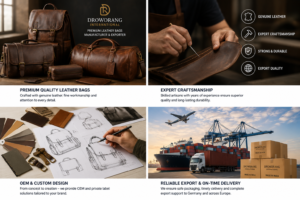
Table of Contents
- Why Handmade Leather Bags Are Different
- Choosing Premium Leather
- Leather Inspection and Grading
- Designing the Bag
- Pattern Making
- Leather Cutting
- Skiving and Edge Preparation
- Hand Stitching vs Machine Stitching
- Hardware Installation
- Edge Painting and Burnishing
- Quality Inspection
- Conditioning and Finishing
- Packaging and Export
- Benefits of Handmade Leather Bags
- Why Global Buyers Prefer Indian Leather Manufacturers
- Caring for Handmade Leather Bags
- Frequently Asked Questions
- Final Thoughts
Why Handmade Leather Bags Are Different
A handmade leather bag is crafted with precision, patience, and passion. Unlike factory-produced products that prioritize speed, handmade bags emphasize quality and attention to detail.
Each bag is carefully assembled by experienced artisans who ensure every stitch is aligned, every edge is smooth, and every component is perfectly fitted.
The result is a product that is:
- Stronger
- More durable
- More luxurious
- Unique in appearance
- Long-lasting
Every handmade bag tells a story of craftsmanship that machines simply cannot replicate.
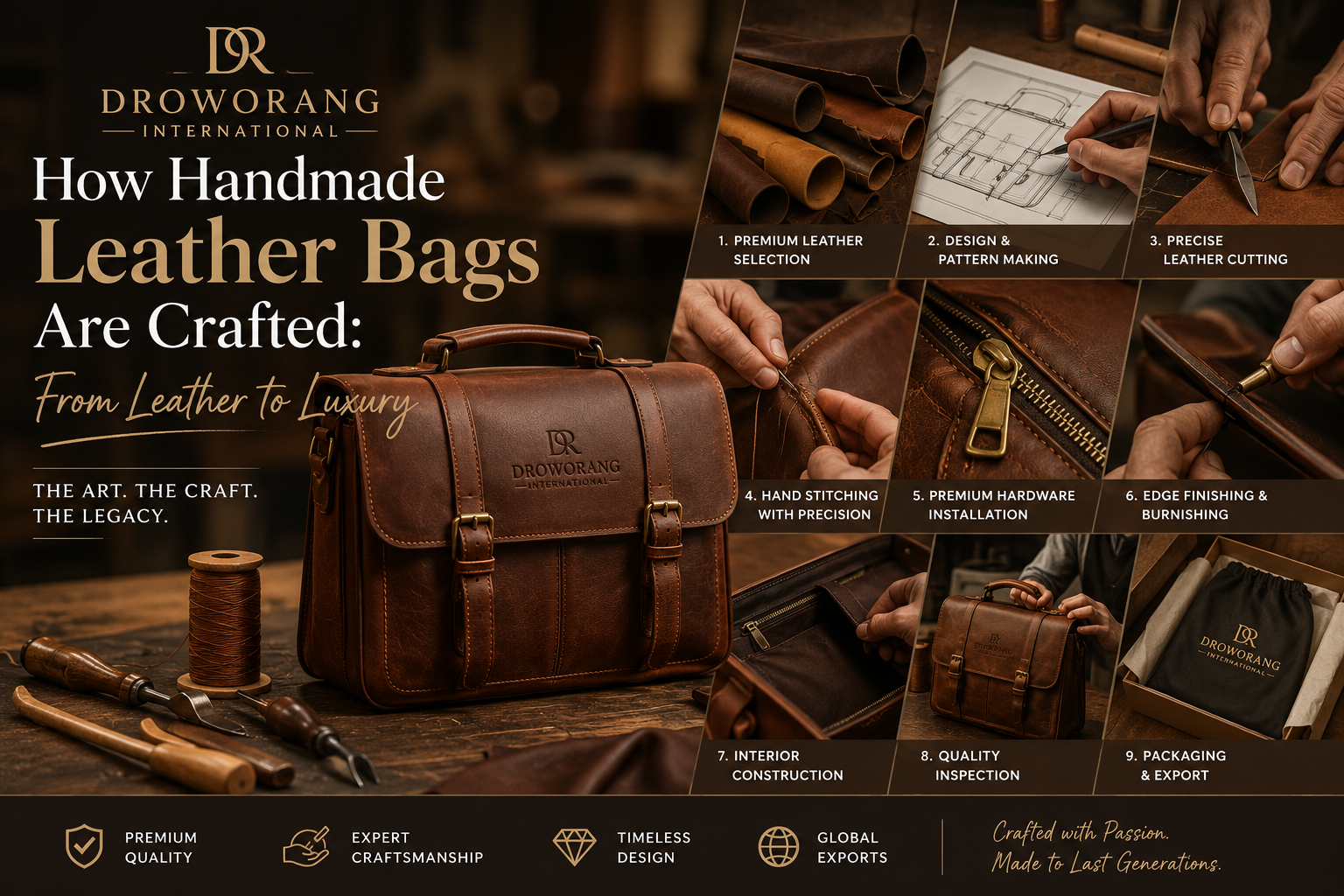
Step 1: Choosing Premium Leather
Everything begins with selecting the right leather.
The quality of leather determines the appearance, durability, texture, and lifespan of the finished bag.
Common leather types include:
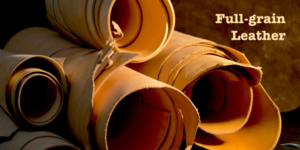
Full-Grain Leather
The highest-quality leather available.
It retains the natural grain, making every bag unique.
Advantages:
- Exceptional durability
- Develops a beautiful patina
- Premium appearance
- Ages gracefully
Top-Grain Leather
Top-grain leather is lightly sanded to create a smoother surface while maintaining excellent strength.
Ideal for:
- Luxury handbags
- Office bags
- Business briefcases
Genuine Leather
Although genuine leather is real leather, it is made from lower layers of the hide.
It offers affordability while maintaining decent durability.
Suede Leather
Produced from the underside of the hide, suede has a soft velvet-like texture and is popular in premium fashion collections.
Step 2: Leather Inspection and Grading
Before production begins, every leather hide undergoes thorough inspection.
Experts examine:
- Thickness
- Grain consistency
- Color uniformity
- Surface imperfections
- Stretch characteristics
- Natural markings
Only premium hides proceed to manufacturing.
This ensures every finished bag meets international quality standards.
Step 3: Designing the Leather Bag
Every successful leather bag begins with thoughtful design.
Professional designers consider:
- Market trends
- Customer preferences
- Functionality
- Weight distribution
- Interior compartments
- Hardware placement
- Ergonomics
Design software and physical prototypes are often used before production begins.
Step 4: Pattern Making
Pattern making is similar to creating a blueprint.
Each component of the bag is carefully measured and designed, including:
- Front panel
- Back panel
- Side gussets
- Handles
- Bottom panel
- Interior pockets
- Zipper sections
- Strap attachments
Precision here ensures all parts fit together perfectly.
Step 5: Leather Cutting
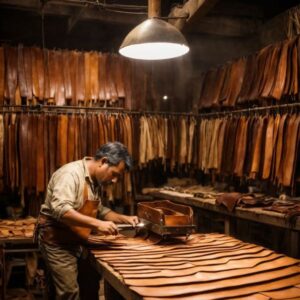
Once patterns are finalized, artisans carefully cut each leather piece.
This process requires:
- Sharp cutting knives
- Steel templates
- Skilled hands
- Careful grain alignment
Accurate cutting minimizes waste and ensures a professional finish.
Step 6: Skiving and Edge Preparation
Leather edges are often thick.
To reduce bulk, artisans perform skiving, a process that thins specific areas before stitching.
Benefits include:
- Cleaner folds
- Better flexibility
- Professional appearance
- Stronger construction
Step 7: Stitching the Leather Bag
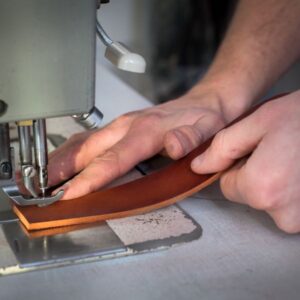
Stitching is one of the most important stages.
Hand Stitching
Traditional saddle stitching uses two needles to create exceptionally strong seams.
Advantages:
- Stronger than machine stitching
- Easy to repair
- Luxury appearance
- Long lifespan
Machine Stitching
Industrial sewing machines increase production speed while maintaining high quality when operated by experienced technicians.
Luxury manufacturers often combine both techniques.
Step 8: Installing Premium Hardware
Luxury leather bags use premium metal accessories such as:
- YKK zippers
- Brass buckles
- Magnetic snaps
- Rivets
- D-rings
- Metal feet
- Adjustable sliders
High-quality hardware enhances both functionality and appearance.
Step 9: Edge Painting and Burnishing
Raw leather edges are refined through edge finishing.
Two common techniques include:
Edge Painting
Several coats of edge paint create smooth, elegant edges.
Burnishing
Edges are polished using wax and friction to produce a glossy, sealed finish.
Both methods protect the leather and improve aesthetics.
Step 10: Lining and Interior Construction
The inside of the bag is just as important as the exterior.
Manufacturers use premium lining materials such as:
- Cotton canvas
- Polyester
- Microfiber
- Suede lining
- Leather lining
Interior features often include:
- Laptop sleeves
- Zip pockets
- Mobile compartments
- Pen holders
- Card slots
- Key hooks
Step 11: Quality Inspection
Every handmade leather bag undergoes rigorous quality checks.
Inspectors verify:
- Stitch quality
- Leather consistency
- Color matching
- Hardware functionality
- Handle strength
- Zipper operation
- Shape symmetry
- Surface finish
Only flawless products move to packaging.
Step 12: Conditioning and Finishing
Leather conditioning nourishes the material while enhancing its natural beauty.
Artisans apply premium conditioners to:
- Increase flexibility
- Protect against drying
- Improve shine
- Highlight the grain
The final polishing gives each bag its luxurious appearance.
Step 13: Packaging and Export
Luxury presentation matters.
Each handmade leather bag is carefully packed using:
- Dust bags
- Tissue paper
- Protective foam
- Moisture absorbers
- Branded boxes
- Export cartons
Proper packaging ensures products arrive safely worldwide.
Why Handmade Leather Bags Last Longer
Handmade leather bags outperform synthetic alternatives because they use:
- Premium natural leather
- Strong stitching
- Reinforced stress points
- High-quality hardware
- Skilled craftsmanship
With proper care, they can last for decades.
Why Indian Leather Manufacturers Are Trusted Worldwide
India has established itself as one of the world’s leading leather manufacturing hubs due to its skilled artisans, strong craftsmanship traditions, and competitive production capabilities.
International buyers choose Indian manufacturers because they offer:
- Experienced leather craftsmen
- Competitive pricing
- High-quality workmanship
- Custom OEM and ODM services
- Private label manufacturing
- Flexible order quantities
- Reliable export experience
- Ethical production practices
These strengths make India a preferred sourcing destination for brands across Europe, North America, Australia, and the Middle East.
Caring for Handmade Leather Bags
To extend the life of your leather bag:
- Store it in a breathable dust bag.
- Keep it away from prolonged direct sunlight.
- Avoid excessive moisture.
- Clean it with a soft, dry cloth.
- Condition the leather every few months.
- Do not overload the bag, as this can distort its shape.
- Allow wet leather to air dry naturally—never use direct heat.
Proper care helps preserve the leather’s texture and allows it to develop a rich patina over time.
Frequently Asked Questions
Are handmade leather bags better than machine-made bags?
Handmade leather bags generally offer superior craftsmanship, durability, and individuality. While machine-made bags can be consistent and efficient to produce, handcrafted bags often receive greater attention to detail.
Which leather is best for luxury bags?
Full-grain leather is widely regarded as the finest choice because it retains the natural grain, offers exceptional durability, and develops a beautiful patina with age.
How long does it take to make a handmade leather bag?
Depending on the complexity of the design, a handcrafted leather bag can take anywhere from several hours to several days to complete.
Do handmade leather bags last longer?
Yes. When crafted with premium materials and properly maintained, handmade leather bags can last for many years, often becoming more attractive as they age.
Can manufacturers create custom leather bags?
Yes. Many manufacturers provide OEM, ODM, and private-label services, allowing brands to customize designs, colors, leather types, hardware, linings, and branding.
Conclusion
The journey from raw leather to a luxury handmade bag is a remarkable combination of tradition, precision, and creativity. Every stage—from selecting premium hides and creating precise patterns to hand stitching, finishing, and quality inspection—contributes to a product that embodies craftsmanship and lasting value.
In a world increasingly filled with disposable fashion, handmade leather bags stand apart as timeless investments. They offer exceptional durability, refined aesthetics, and a unique character that evolves beautifully over time. Whether you’re an individual seeking a premium accessory or a business sourcing products for your brand, understanding the craftsmanship behind handmade leather bags highlights why they continue to be valued across global markets.
If you’re looking for a trusted manufacturing partner for high-quality handmade leather bags, Droworang International specializes in producing premium leather goods for wholesale, private-label, and custom projects. With skilled artisans, careful quality control, and a commitment to excellence, we help brands bring their leather collections to life with products that combine durability, elegance, and authentic craftsmanship.