Are you perhaps dreaming of how to invent an effortlessly chic European look? Maybe you are curious about that one accessory that can instantly elevate any outfit, from a casual coffee run to a glamorous evening affair? You’d be surprised how much power fits right into the palm of your hands.
From red carpets to high streets, clutch bags have become more than just accessories, they’re statements. No straps. No fuss. Just elegance, right under your arm.
Ladies clutch bags in Europe are defining the rules of functionality and flair in the modern fashion world. What started out as a glamorous evening essential, has now claimed its place in high-street trends. Across Europe, women are making statements with how they carry their style with a clutch leading the charge.
The origins and evolution of Clutches
The story of the clutch bag is as fascinating as its evolution.
Before and during the 17th-century : Before pockets became the norm in clothing, both men and women carried small bags or pouches. These were simple, often attached with a drawstring, worn to belts or girdles. Even then, these early predecessors to the clutch were more than just utilitarian. In ancient civilizations like Egypt, women carried embellished pouches of precious materials, signalling wealth and status.
Around the 1670s, pockets started to be sewn into men’s clothing, reducing their need for external pouches for everyday items. Men’s bags became more specialized, for carrying larger documents. For women, voluminous gowns of the era became the thing, which meant that bags were typically worn under their skirts, tied to their waists, as “pockets.” These were functional but largely unseen.
The rise of Reticule in the 18th-century : Dramatic change in women’s fashion, with a focus on more slender, columnar silhouettes reminiscent of classical Roman and Greek designs (think Regency era). The old hidden pockets were unsightly and impractical in these lighter, less voluminous dresses.
This led to the birth of the “reticule” (also known as a “ridicule” or “indispensable” in England). These were small, often exquisitely decorated drawstring bags, carried openly by hand or on a cord over the arm. They were designed to hold just a few essentials like a handkerchief, a fan or a dance card. The reticule is widely considered the direct ancestor of the modern clutch, as it was the first widely adopted handheld bag for women.
A slight diversion from the clutch in the 19th-century : As the 19th century progressed, women’s roles expanded beyond the home, and their bags began to grow in size, focusing functionality. With increased travel by train and greater social independence, women needed to carry more.
This era saw the popularity of larger handbags like carpet bags and structured purses. While small coin purses and decorated pouches still existed, the true “clutch” as a primary accessory was less prominent, overshadowed by more utilitarian options.
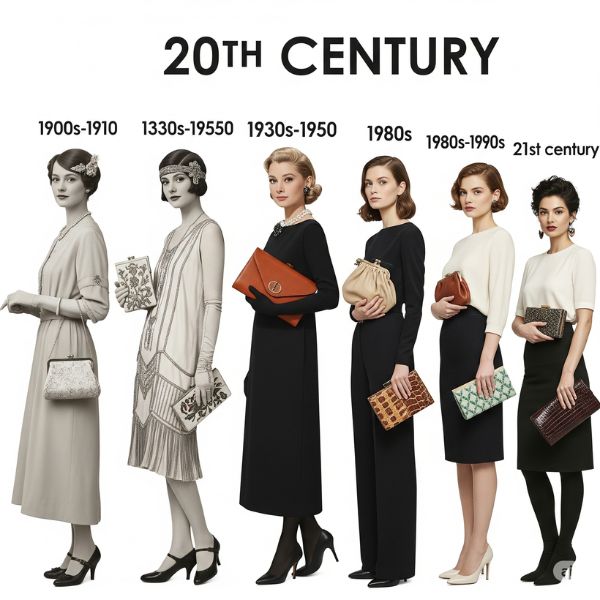
The coming age of clutch in the 20th-century : From the 1900s-1910s handbags began to be more overtly feminine, but still often had handles. The talk of the handle-free clutch was there, but not yet dominant.
The 1920s welcomed a new era of liberated fashion. The demand for more compact bags that wouldn’t disrupt the clean lines of the dresses of the era emerged. The clutch, covered with beads, embroidery, or Art Deco patterns, became the ultimate fun accessory for the modern woman.
Coming to the 1930s-1950s time, designers like Christian Dior opened the path to popularize the clutch, making it more accessible beyond just high society. Leather clutches came into the picture, slightly larger and more practical, yet still delivering a luxurious appeal. During Hollywood’s Golden Age, actresses like Audrey Hepburn and Grace Kelly solidified the clutch’s status as a symbol of glamour and sophistication on red carpets and silver screens.
And the 1980s-1990s witnessed various iterations of the clutch. From structured box clutches to soft pouches, adapting to the diverse fashion trends of the decades, from power dressing to minimalism.
The 20th-century brought versatility and personal expression : After a slight fall in the late 20th century, the clutch made a mighty comeback. Designers worked on reinventing it, offering an incredible diversity of forms, materials, and functions. The 21st-century clutch broke free from being solely an evening bag.
The variety of materials erupted, ranging from conventional leather and exotic skins to eco-friendly vegan substitutes, recycled plastics, and cutting-edge textiles. Textures became more varied and designs bolder.
These days, the clutch is a powerful representation of individuality. There is a clutch to fit every personality and occasion, from simple, structured designs to forefront creations, solidifying its status as a mainstay of classic style.
From occasional fashion to everyday statement
Ladies clutch bags in Europe, formerly only worn on special occasions, are now a commonplace item in wardrobes of Europe. The way women carry clutches has been rewritten by European fashion, especially in cities like Milan, Amsterdam, and Copenhagen. The modern clutch is subtle, practical, and stylish in place of mere glamour and sparkle.
The clutch has been accepted by European streetwear style with ease. These days, women wear it with denim jackets and tailored blazers. It blends in perfectly with both weekend and business wear. The European woman expects more from her bag, and the clutch has risen to meet the occasion.
Indian leather’s enduring appeal in European fashion
Nothing beats real leather when it comes to its enduring appeal and a luxurious feel. Highly valued in Europe for its durability and tactile quality, leather is at the heart of Droworang’s collection. With proven dedication to making high-quality leather clutches that are always in style, it reflects a commitment to global craftsmanship.
European fashion, which values both heritage and quality, has embraced Indian leather accessories with open arms. With rich grains and strong stitching, Indian-made leather clutches are durable and will last for years without losing their style.
Droworang style guide for your best clutch look
Here’s a quick style guide to ensure that your clutch leaves a bold remark wherever you go :
- Match textures to the season – Go for suede in autumn, leather in winter, and canvas or linen in spring-summer
- Balance the outfit – Let your clutch pop if your outfit is neutral, or choose a minimalist clutch for louder prints
- Pair with shoes, not the dress – combine your clutch with your footwear for a polished look
- Consider functionality – Think about what you’ll carry : phone, lipstick, keys, and pick a clutch with compartments if needed
- For evening events – Opt for a box clutch or something with a metallic or embellished finish
- For everyday errands – A larger foldover clutch or wristlet will keep things stylish yet convenient
- Daytime Chic : Pair a structured leather clutch with tailored trousers or smart-casual dresses
Hold your Droworang clutch with confidence. Tuck it under your arm, cradle it in one hand, or use a delicate chain strap if provided for hands-free moments, and you are set to shine.
Conclusion
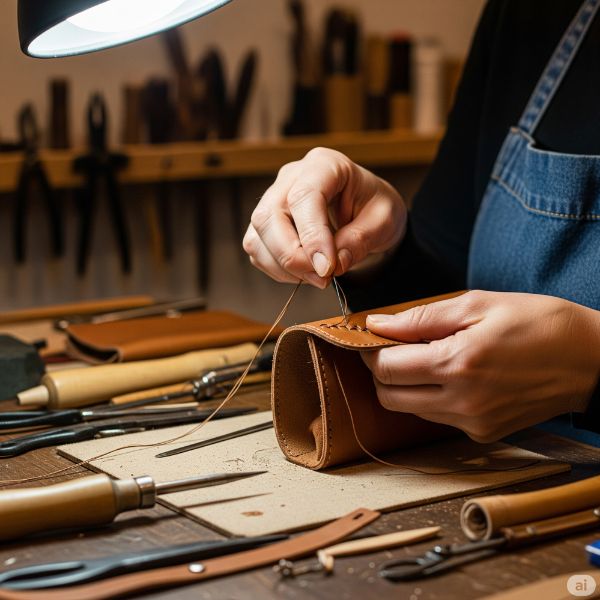
The clutch bag has come a long way from its simple beginnings to become a fashion icon in Europe. It is still an important part of the sophisticated world of European fashion. Here at Droworang, we take pride in being one of the best exporters of women’s clutch bags in Europe. Our leather bags are made with care and combine traditional Indian craftsmanship with modern European style. Each Droworang clutch is made to be the perfect “plus-one” for you, ready to go with you to any event with style and grace.
Ready to upgrade your fashion look? Get your plus-one right now!